TERRAFORMING ERA
INIQUITATUM PROJECT
After the catastrophe that unleashed the nuclear winter that destroyed the earth as we knew it (year 2,200), the last links of humanity came together to create the "Iniquitatum" project (year 2,248).At least 150 years passed until the first of the Terraforming Ships left the Earth's unstable atmosphere, another 300 years passed until humanity was able to find a peaceful and habitable planet. Up to that point, 200 Terraforming Ships had left our home planet.It took 456 years until humanity was able to achieve some of its greatest scientific, technological and mathematical advances.The year is 3,106AD.
TECHNOLOGY
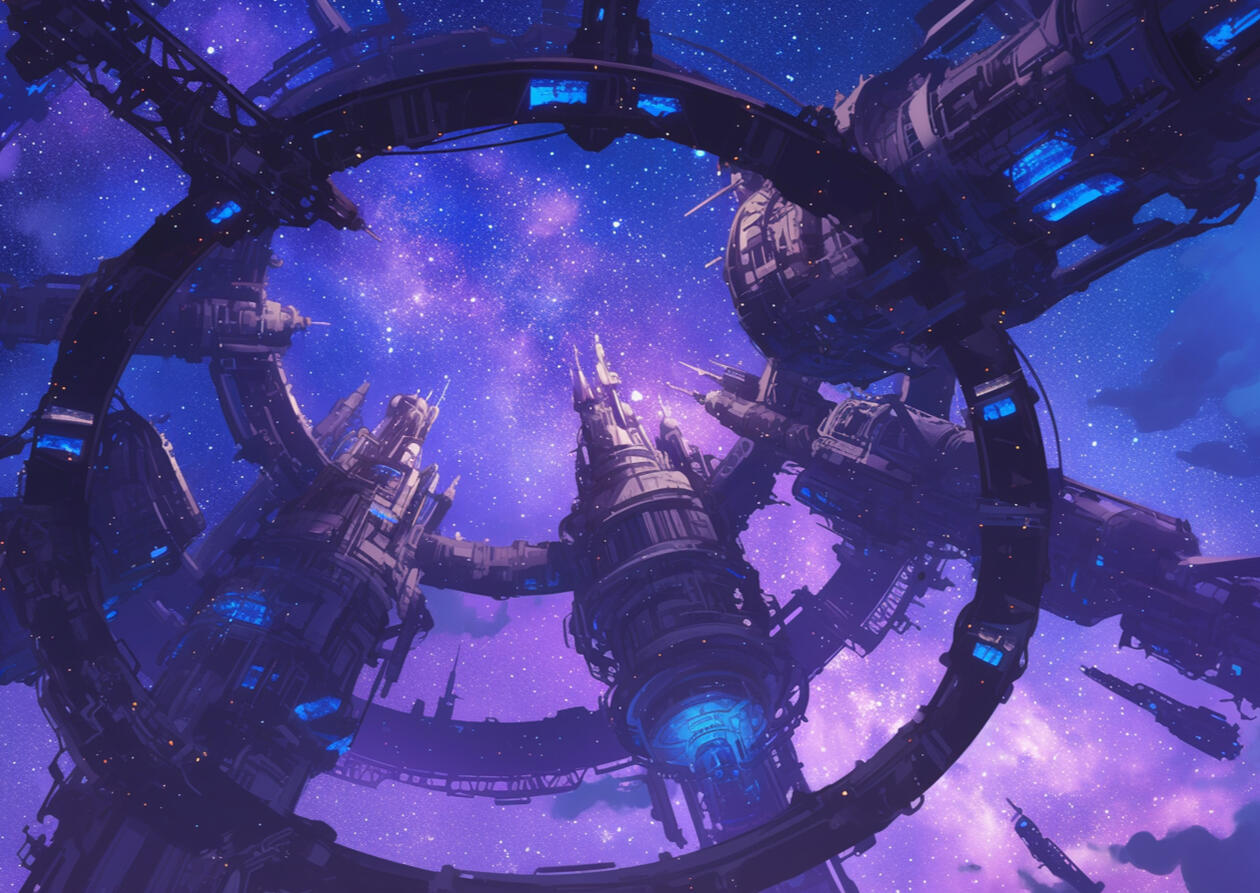
Interstellar Space Station-JSS2250v12 (ISS):It began to be built in the year 2250, initially it was intended as a satellite that would orbit the Earth in order to improve the interspace communication of the first exploration ships that crossed the solar system at the beginning of the "Iniquitatum" project. However, growing needs made it evolve into a C2 class superstructure. Its construction "officially" ended in the year 2329, however, it continues to be constantly visited, modified and praised.
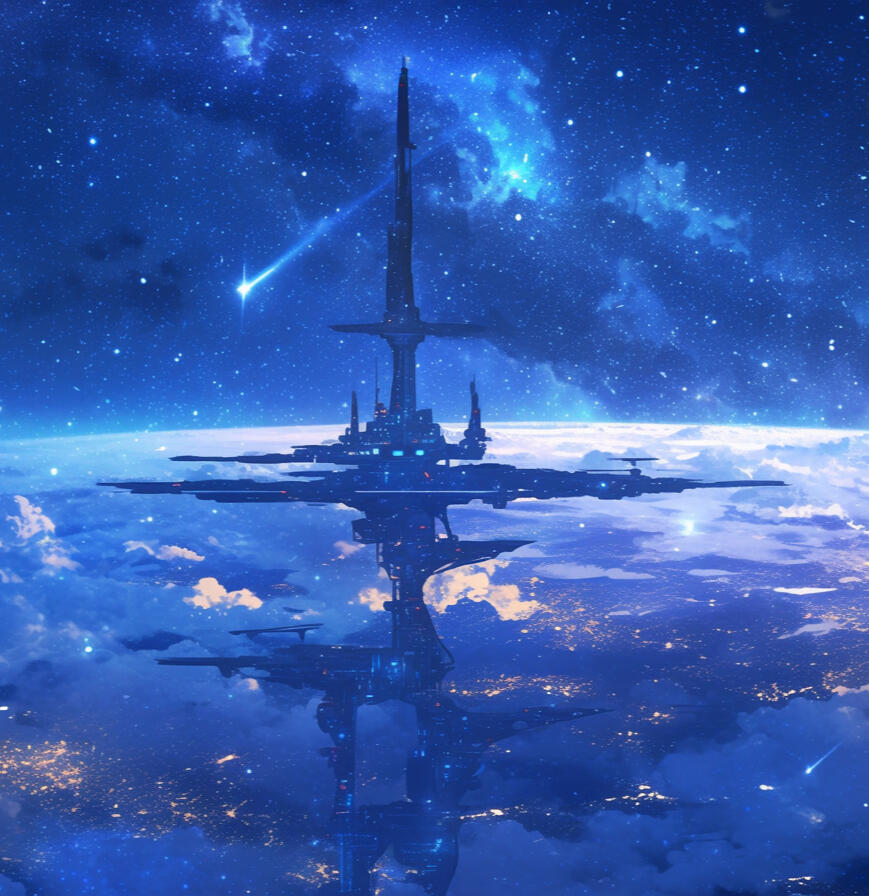
Terraformimg Ships:B1 Interspace Classification Ship/A-4 Classification Mothership.It is a vehicle with the capacity to transport 5,000 people, not including the ship's staff members. This wonderful vehicle is largely automated by an advanced AI that can be responsible for notifying the staff of the required logistics and maintenance. The primary fuel for these ships is a fusion reactor, or antimatter reactor, depending if it is an old or recent model, emergency energy comes from solar sails or onboard nuclear reactors.Some other relevant data is shown below:
| LENGHT | WIDHT | HEIGHT | WEIGHT |
|---|---|---|---|
| 5-10 kilometers (3-6 miles) | 2-4 kilometers (1.2-2.5 miles) | 1-2 kilometers (0.6-1.2 miles) | 10-100 million metric tons. |
Environment and SustainabilityGravity: Artificial gravity through centrifugal force or gravity plating.
Atmosphere: Oxygen generation using algae or electrolysis of water.
Recycling: Closed-loop systems for air, water, and waste.
Medical Facilities: Advanced hospitals and emergency care centers.Technology and FeaturesNavigation: Stellar cartography, quantum beacons, and AI-piloted systems.
Communication: Quantum entanglement or subspace communications for real-time contact.
AI Core: A central intelligence managing ship functions.
Entertainment: Holodecks, VR systems, and recreational areas to support morale.Defensive and Offensive SystemsShielding:
Energy shields to deflect debris, radiation, and attacks.
Physical armor, e.g., nanocomposite or graphene layers.Weaponry:
Railguns, laser cannons, and missile pods for external threats.
Defensive drones for close-quarters protection.Logistics and StorageCargo Capacity: Millions of tons for food, raw materials, and equipment.
Docking Bays: Large bays for smaller ships, shuttles, and exploratory vessels.
Waste Management: Advanced recycling systems for zero-waste efficiency.
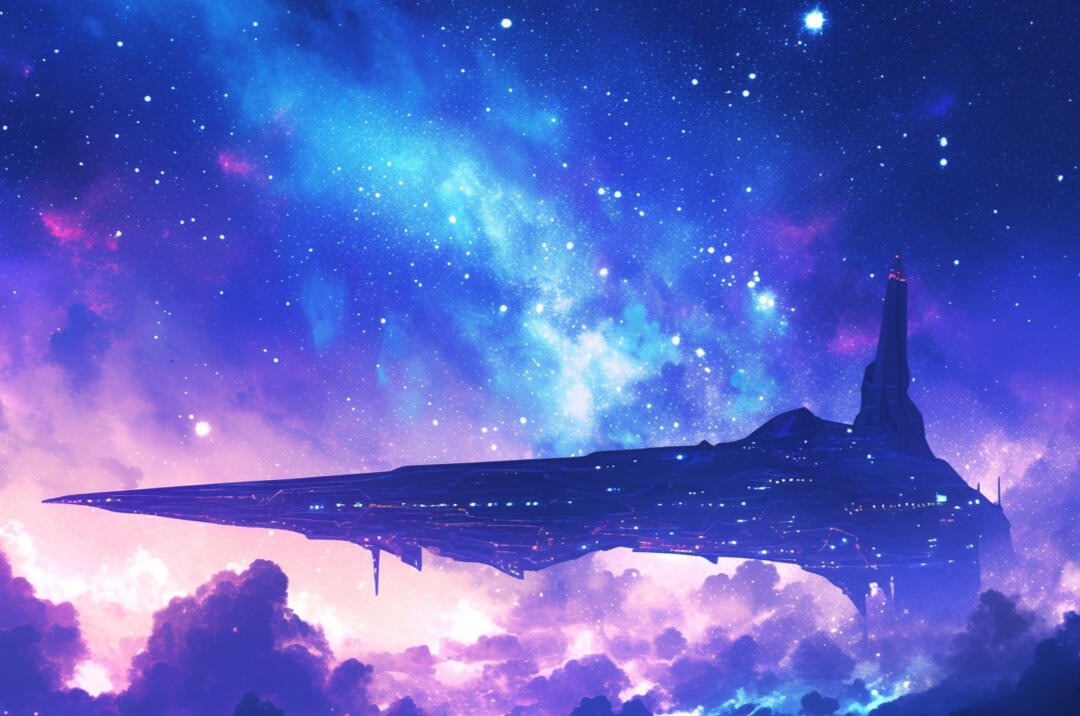
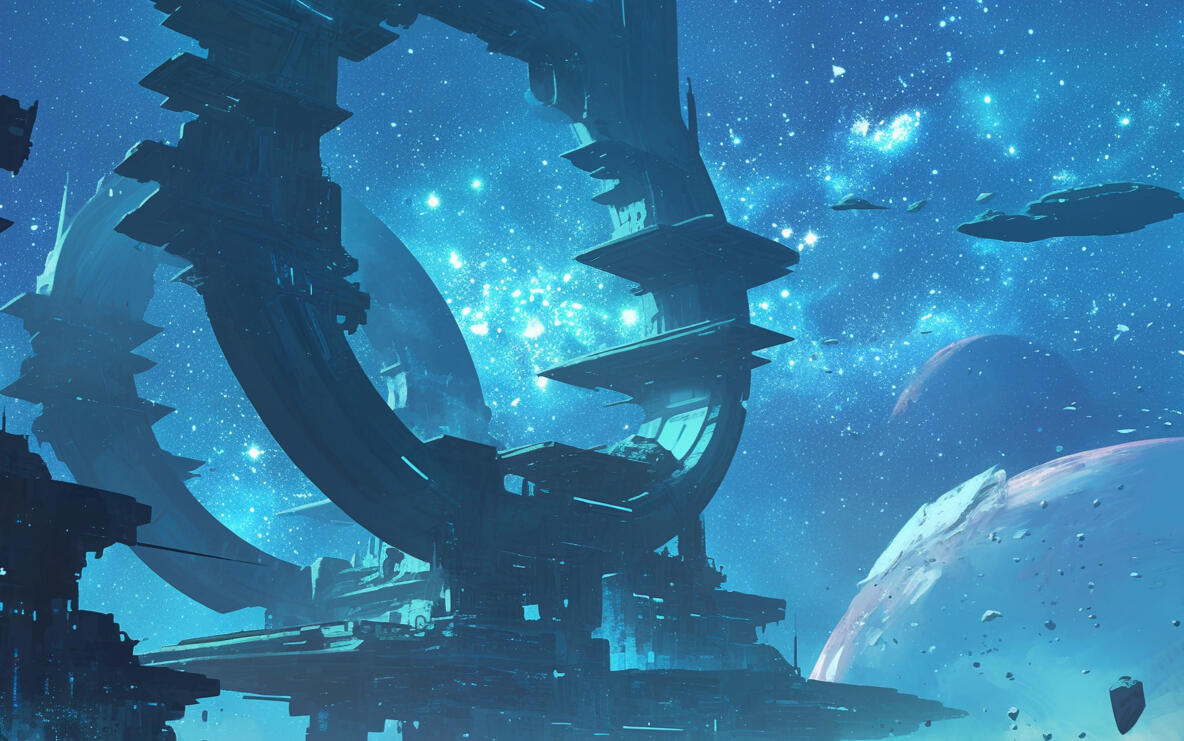
Jump Gates:Jump gates are massive structures that create stable, navigable pathways—like wormholes or hyperspace corridors—between distant points in space. They act as "portals" that allow spacecraft to traverse vast distances instantaneously or within a fraction of the time conventional travel would require.On appearance, these structures are ring-shaped with a glowing, energy-filled core. They have networked pylons extending outward, housing reactors, navigation systems, and stabilizers. Often they have the size of small moons or large cities to accommodate massive starships.Variants of Jump Gates:Static Gates: Permanently fixed in specific locations; require paired gates for functionality.
Mobile Gates: Smaller, mobile structures mounted on ships or space stations for flexible use.
One-Way Gates: Designed for colonization or emergencies, these gates can only transport ships in one direction.
Time-Distorting Gates: Rare gates that distort time, potentially allowing travel into the past or future.
HUMANKIND
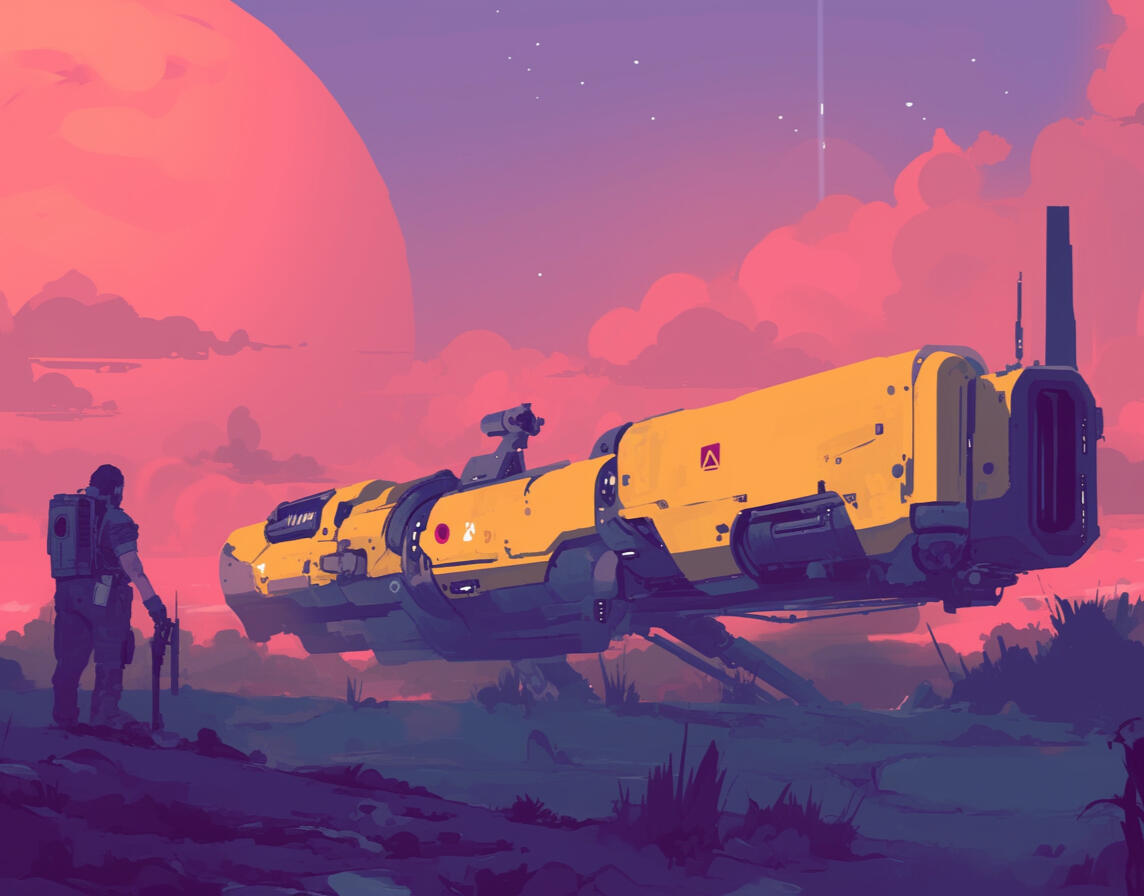
The beginnings of the "Iniquitatum" project begin 20 years after the nuclear winter, when the JSS (Jaeger Space Service) is founded. Humanity begins to join its last efforts, both monetary, natural and manpower, to abandon its decaying home.In the year 2,650 the first exploration ships that entered space found the perfect planet to receive us; the planet JCZ467-B2. Starting that same year, humanity left the earth with high hopes, hopes that were not in vain.Planet JCZ467-B2 had new resources and some others already known that were studied and used to improve our rudimentary technologies. The JSS was also responsible for imposing a new order; an interstellar council made up of high-ranking military personnel from the various ancient nations on Earth.Military personnel can access the following ranks and decorations regardless of their occupation (order from least to most relevant):
Efficiency Medallion
Gold Medallion
Volunteer Cross
Army Cross
Cross of Loyalty
Loyalty Star
Star of Merit
Diamond Star
Order of the Navy
United Order
Crescent of Excellence
Royal Navy Crescent
KEY CONCEPTS
Concepts generally used in the daily lives of space explorers, members of the military and civilians:
Black Holes: The mysteries of singularities, spaghettification, and time dilation near event horizons.
Wormholes: Hypothetical shortcuts through spacetime—great for interstellar travel themes.
Supernovae: The explosive death of stars, rich with dramatic and visual storytelling potential.
Nebulae: Cosmic clouds of dust and gas, where stars are born—a symbol of beauty and renewal.
Exoplanets: Planets outside our solar system, offering endless possibilities for alien life and environments.
Generation Ships: Massive, self-sustaining spacecraft for long-term colonization.
Terraforming: The process of transforming planets into habitable environments.
Cryosleep Pods: Technology for deep-space travel by freezing the crew for long durations (hypersleep).
FTL Travel: Faster-than-light propulsion methods like warp drives or hyperspace.
Artificial Gravity: How spacefarers simulate Earth-like gravity aboard stations or ships.
Nanotechnology: Miniature machines repairing spacecraft or even colonizing planets.
Antimatter: A potent energy source with potential catastrophic consequences.